
Project Blue Book’s Most Important Investigations
Project Blue Book was a series of systematic studies of unidentified flying objects (UFOs) conducted by the United States Air Force from 1952 to 1969. While the project investigated thousands of UFO reports, only a few cases gained widespread attention. Here are some of the most important UFO investigations from Project Blue Book.
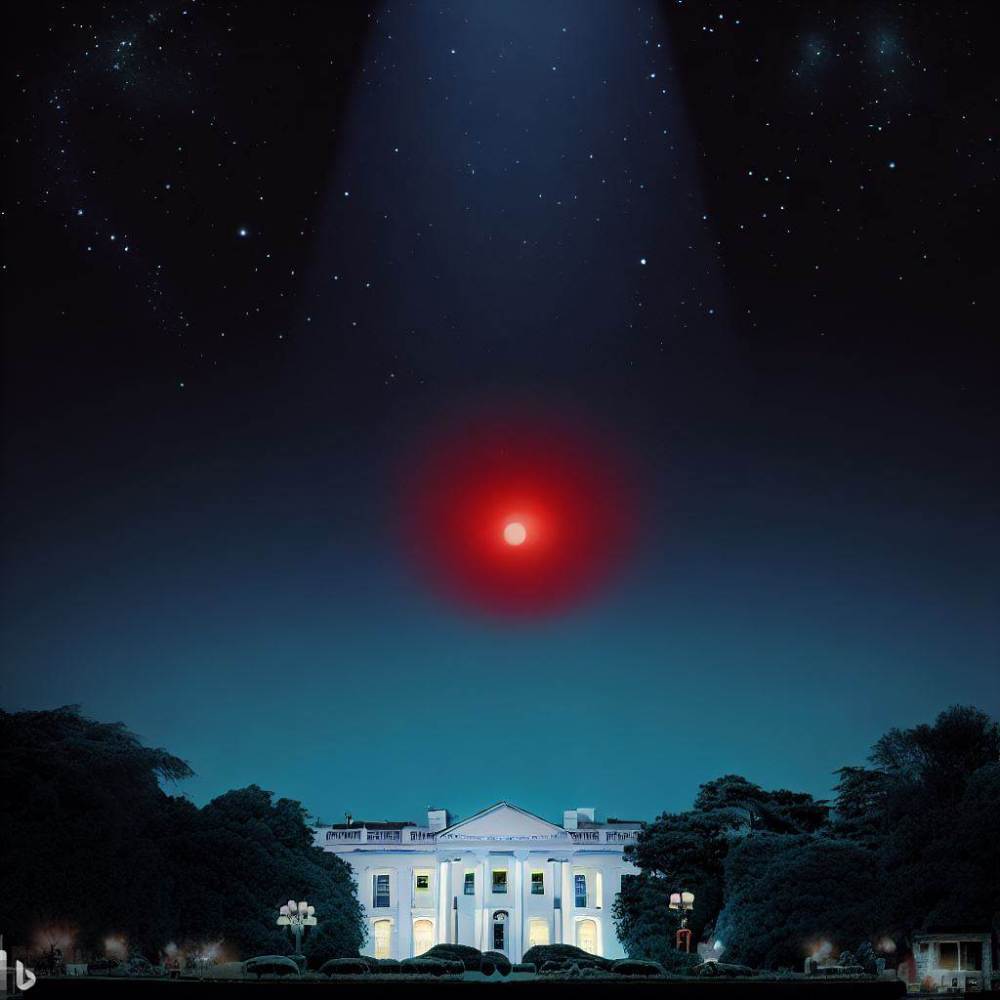
Washington, D.C. UFO incident (1952): A series of UFO sightings over Washington, D.C., prompted the Air Force to conduct an investigation. The objects were detected on radar, and jet fighters were scrambled, but no definitive explanation was provided.
The incident began on the night of July 19, 1952, when air traffic controllers at Washington National Airport (now Ronald Reagan Washington National Airport) and Andrews Air Force Base reportedly detected unidentified objects on radar. They observed erratic movements, high speeds, and sudden changes in direction, which were not typical of known aircraft.
Multiple airline pilots in the vicinity also reported seeing bright lights and unusual flying objects. Some pilots described the objects as white lights or glowing orbs, and they reported that the UFOs were flying in formation or making rapid maneuvers. In response to the sightings, jet fighters from Andrews Air Force Base were scrambled to intercept the UFOs. However, despite the pilots making visual contact, they were unable to catch up with or identify the mysterious objects.
A week later, on the night of July 26, 1952, a similar series of UFO sightings occurred. Radar operators once again detected unidentified objects, and fighter jets were scrambled to investigate. This time, the objects reportedly disappeared when the jets approached, only to reappear once the jets returned to base.
The UFO sightings garnered significant public and media attention, leading the U.S. Air Force to conduct an investigation. Project Blue Book, the Air Force’s UFO investigation program, examined the incident. The official explanation attributed the sightings to temperature inversions that caused radar anomalies, though this explanation has been criticized by UFO enthusiasts.
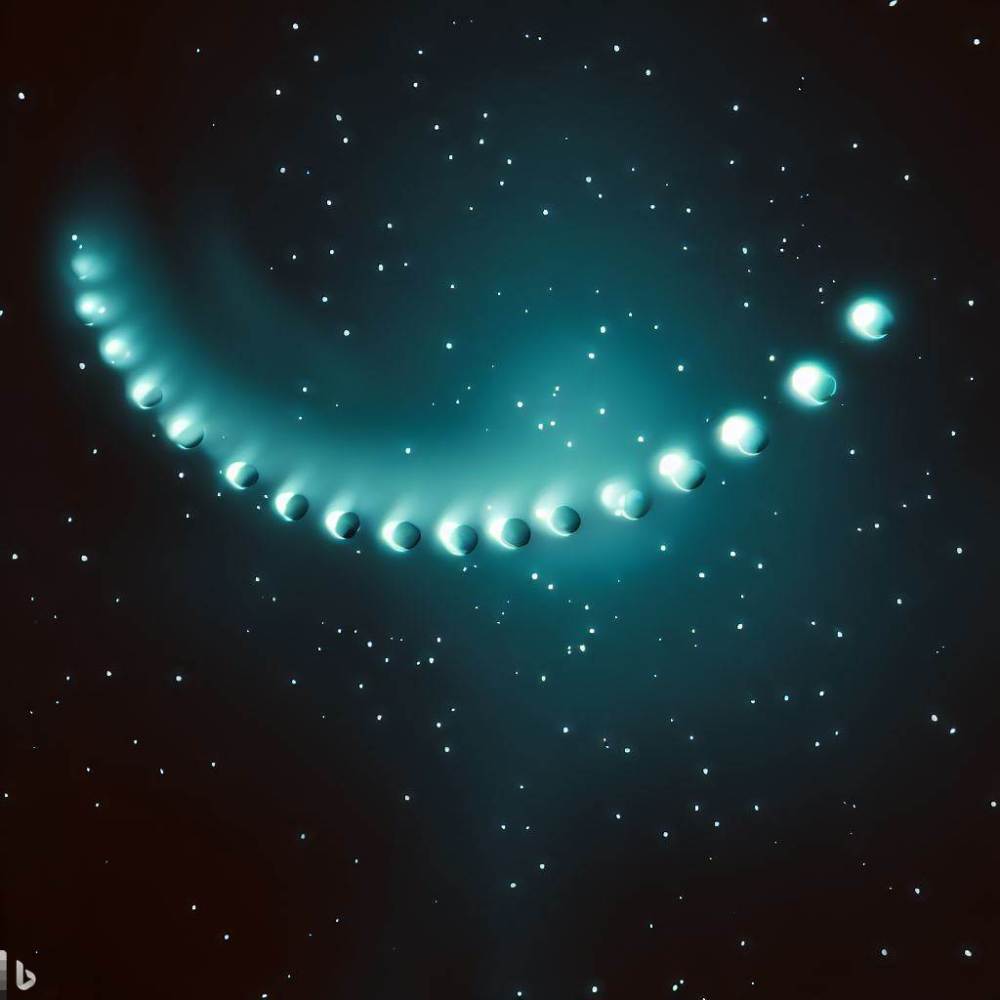
Lubbock Lights (1951): A series of sightings in Lubbock, Texas, involved groups of lights moving in formation across the sky. Project Blue Book investigated the phenomenon but ultimately attributed it to a flock of birds reflecting city lights.
The incident began on the night of August 25, 1951, when a Texas Tech University professor named Dr. W.I. Robinson and his colleagues were sitting on Robinson’s porch. They observed a V-shaped formation of lights moving silently across the sky. The lights were described as a series of bluish-green lights or luminous objects that appeared to be flying in perfect formation.
The professors were intrigued by the sighting and decided to conduct further observations. On subsequent nights, they gathered more witnesses, including other faculty members and their wives, to watch the mysterious lights. The sightings occurred on the nights of August 30 and September 5, with multiple witnesses providing consistent descriptions of the V-shaped formation and the lights’ peculiar behavior.
The professors also attempted to capture the phenomenon on film. On the night of August 30, a Texas Tech student named Carl Hart Jr. managed to take a series of photographs showing the lights in formation. The images gained widespread attention and were published in local newspapers, contributing to the notoriety of the Lubbock Lights incident.
The Lubbock Lights case attracted the interest of the U.S. Air Force, which conducted an investigation. The official conclusion, stated in Project Blue Book (the U.S. Air Force’s UFO investigation program), was that the lights were likely caused by a type of bird known as plovers. According to the Air Force, the birds’ white underbellies reflected the city lights, creating the appearance of a luminous V-shaped formation.
This explanation, however, has been met with skepticism by some UFO researchers and enthusiasts. Critics argue that the bird explanation doesn’t fully account for the characteristics described by the witnesses, such as the lights’ speed and lack of flapping wings.
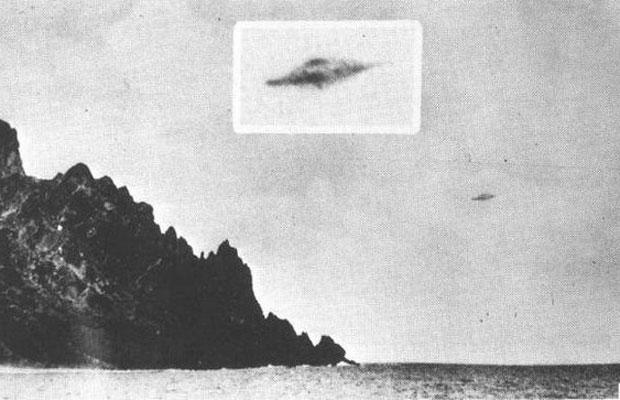
Trindade Island UFO Incident (1958): A Brazilian Navy ship reported a UFO sighting near Trindade Island. Project Blue Book conducted an investigation, but the official conclusion was that it could not be explained.
On January 16, 1958, personnel aboard the Brazilian Navy ship Almirante Saldanha reported witnessing a UFO near Trindade Island. The incident unfolded during a scientific expedition, adding an air of credibility to the sightings. The ship’s crew, including trained and experienced observers, reported an unidentified flying object performing seemingly impossible maneuvers over the island.
Eyewitnesses on the Almirante Saldanha reported that the UFO hovered over the island for a significant period, displaying erratic movements and extraordinary speeds. Multiple crew members provided consistent descriptions of a metallic, disc-shaped object with bright lights, defying the laws of physics as it maneuvered through the sky.
One of the most compelling aspects of the sighting was the presence of skilled photographers on board who managed to capture a series of photographs of the UFO. These images, taken by Almiro Baraúna, a journalist accompanying the expedition, added a visual dimension to the accounts, further fueling public interest in the incident.
The photographic evidence from the Trindade Island incident became a focal point for investigators and enthusiasts seeking to unravel the mystery. The images captured by Baraúna showed a saucer-shaped object surrounded by a halo of light, suspended in the air above the island. The photographs were subjected to rigorous analysis by both Brazilian and international experts.

Mantell Incident (1948): Captain Thomas Mantell, a Kentucky Air National Guard pilot, died while pursuing a UFO. Project Blue Book concluded that Mantell likely misidentified the planet Venus.
The 1948 Mantell UFO incident refers to an event that occurred on January 7, 1948, involving an experienced pilot named Captain Thomas F. Mantell. At the time, Mantell was flying an F-51 Mustang on a training mission for the Kentucky Air National Guard. While in the air, he and his fellow pilots received reports of an unidentified flying object (UFO) in the vicinity.
Eyewitnesses, including members of the Kentucky State Police, reported seeing a large, metallic object in the sky. Descriptions varied, with some witnesses stating that the object was circular and others describing it as a large, elongated craft. The UFO was also reported to be moving at a high rate of speed and at a high altitude.
Upon receiving these reports, Mantell and two other pilots in his flight pursued the UFO. As they climbed to higher altitudes, Mantell’s two wingmen broke off the chase due to oxygen equipment problems. However, Mantell continued the pursuit, climbing to an altitude of around 25,000 feet.
Tragically, the last communication from Mantell reported that he could see the object and that it appeared to be of tremendous size. Shortly after, Mantell’s plane crashed, leading to his death. The official cause of Mantell’s crash was determined to be a lack of oxygen, suggesting that he may have ascended to an altitude where the air was too thin for him to breathe without supplemental oxygen.
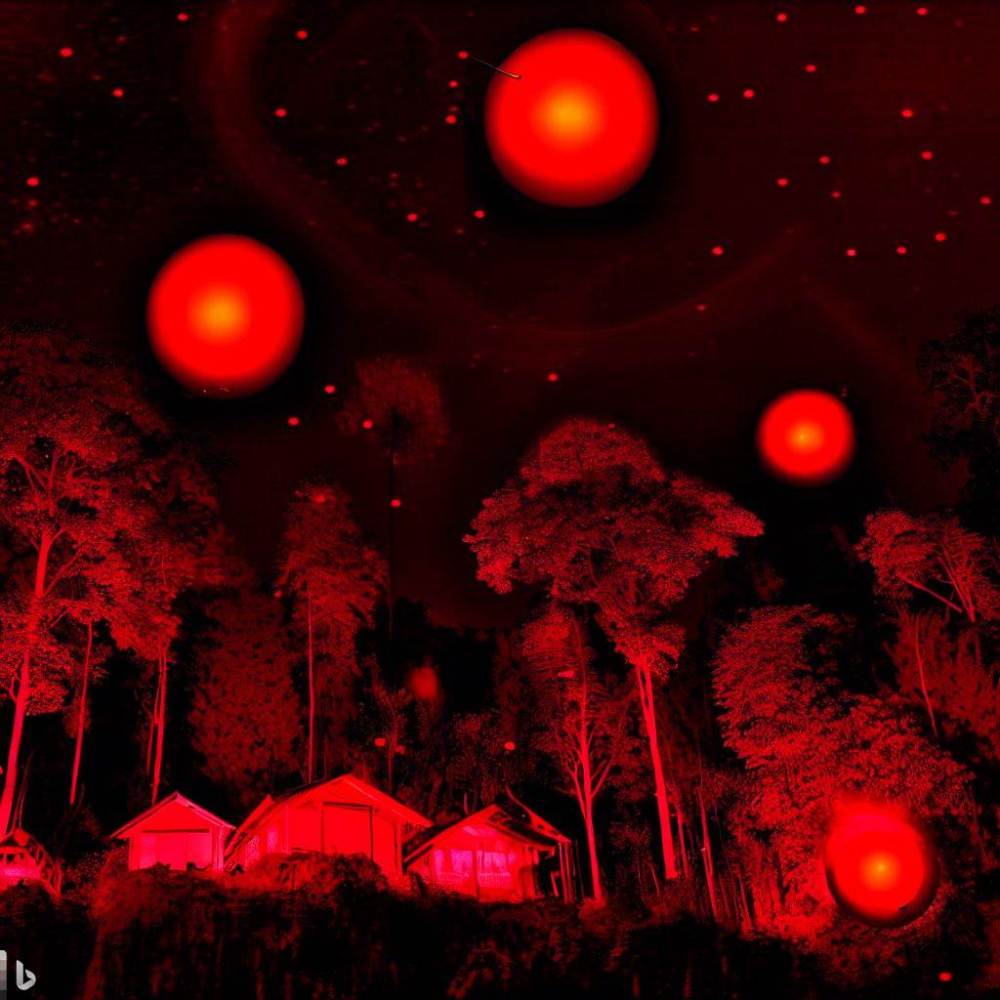
Exeter Incident (1965): Multiple witnesses reported seeing a series of lights and a structured craft in Exeter, New Hampshire. Project Blue Book could not provide a conventional explanation for the sightings.
Around 2:00 AM on September 3, 1965, Norman Muscarello reported seeing a large, red object with bright lights hovering above a farmhouse in Exeter. He ran to the police station to report the sighting. Officer Eugene Bertrand and Officer David Hunt were dispatched to the location. Upon arrival, they also observed strange lights in the sky. Bertrand described the object as a large craft with blinking red lights and white lights on top. The officers reported that the object was silent and moved erratically. It appeared to follow their patrol car and even hovered above them at times.
The witnesses described the object as large, silent, and with a red light on top, white lights on the bottom, and a row of rectangular windows emitting a bluish light. Throughout the night, multiple witnesses, including residents and police officers, reported sightings of the unidentified flying object.
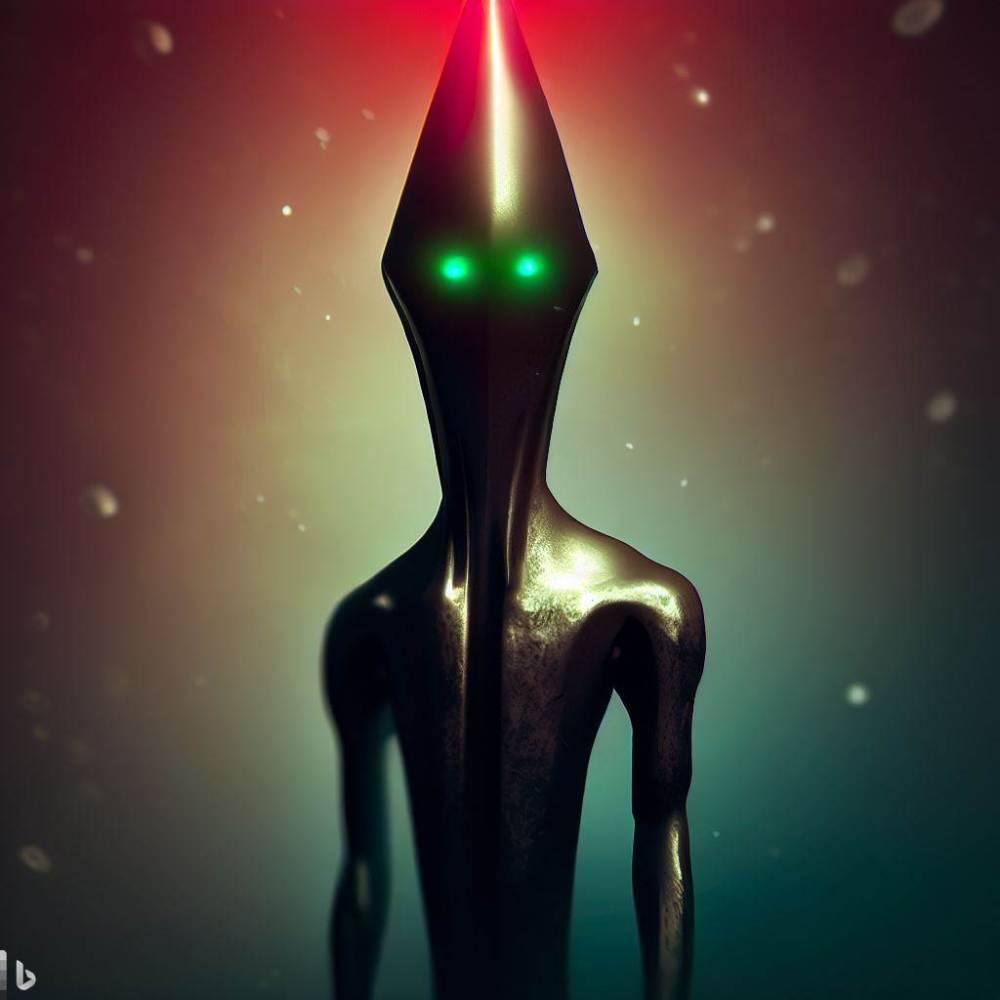
Flatwoods Monster Incident (1952): A group of witnesses in Flatwoods, West Virginia, reported seeing a strange object and encountered a creature. Project Blue Book suggested that a meteorite and an owl may have caused the sightings.
The Flatwoods Monster incident, also known as the “Braxton County Monster” or “Green Monster,” occurred on the evening of September 12, 1952, in Flatwoods, West Virginia. On the evening of September 12, 1952, a group of witnesses, including local children, reported seeing a bright object streaking across the sky and crash on the property of a local farmer, G. Bailey Fisher. The witnesses, which included brothers Edward and Fred May, along with their friend Tommy Hyer, went to investigate the reported crash site.
Upon reaching the top of a hill near the crash site, the group reported smelling a strong, pungent odor and seeing a pulsating, red light in the distance. As they approached the source of the light, they claimed to have seen a large metallic object on the ground, emitting hissing and sizzling sounds.
The group then reported encountering a creature that became known as the “Flatwoods Monster” or “Green Monster.” Descriptions of the creature varied, but common elements included a tall humanoid figure with a glowing, round face and claw-like hands.
Local authorities and news outlets were alerted to the incident, and the U.S. Air Force was called in to investigate as part of Project Blue Book, which aimed to assess the nature of UFO sightings and determine if there was any potential threat to national security.
Project Blue Book investigators, led by Captain George Gregory, visited the site and conducted interviews with witnesses. The Air Force concluded that the bright light and crash sounds were likely caused by a meteor, and the creature sightings could be attributed to an owl perched on a tree branch. The hissing and sizzling sounds were attributed to the natural noises of the area. Project Blue Book’s official explanation dismissed the idea of extraterrestrial involvement and categorized the incident as a misidentification of natural phenomena.
 ALIEN BLUE BOOK
If the Lubbock Lights were plovers as is sometimes claimed or moths as former Blue Book Chief Capt. Ruppelt later claimed, how come there have been no encore performances since 1951?
LikeLike
Exactly, Blue Book unfortunately was pressured to come up with non-UAP explanations and some, like this one, were completely ridiculous. Thanks for your comment.
LikeLike