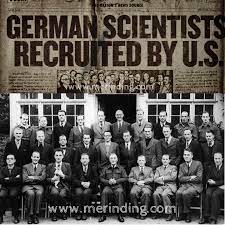
Operation Paperclip and 1947, the year of the flying saucer
Tonight we explore the connection between Operation Paperclip and the year of the flying saucer, 1947.
In the aftermath of World War II, the United States initiated Operation Paperclip, a covert program aimed at recruiting German scientists, engineers, and technicians, including those with questionable backgrounds, to work for the U.S. government. This operation played a crucial role in shaping the scientific landscape of post-war America, contributing to advancements in various fields. However, it also sparked ethical debates and raised questions about the morality of employing individuals with connections to the Nazi regime.
What was Operation Paperclip?
Operation Paperclip was a secret program conducted by the United States Office of Strategic Services (OSS) and later the Joint Intelligence Objectives Agency (JIOA) between 1945 and 1959. The primary objective of the operation was to bring German scientists, engineers, and technicians to the United States to utilize their expertise in scientific and technological endeavors, particularly in the fields of rocketry, aerospace engineering, and other military applications.
Scientists Involved in Operation Paperclip
- Wernher von Braun: One of the most prominent figures recruited through Operation Paperclip was Wernher von Braun, a German rocket scientist who played a key role in the development of the V-2 rocket for Nazi Germany. Von Braun’s expertise in rocketry was instrumental in the establishment of the U.S. space program, and he eventually became a central figure in NASA.
- Arthur Rudolph: Another notable scientist brought to the United States was Arthur Rudolph, an engineer who contributed to the V-2 rocket program. Rudolph played a crucial role in the development of the Saturn V rocket, which was used during the Apollo moon missions.
- Kurt Debus: Kurt Debus, a German engineer and member of the Nazi Party, also joined Operation Paperclip. He became the first director of NASA’s Kennedy Space Center, overseeing numerous successful space launches.
The involvement of Operation Paperclip scientists significantly influenced the scientific landscape of the United States and led to several key advancements:
- Space Exploration: Wernher von Braun and his team’s expertise propelled the U.S. space program forward. Von Braun became the chief architect of the Saturn V rocket, which successfully launched the Apollo missions, including the historic Apollo 11 moon landing in 1969.
- Missile Technology: Operation Paperclip scientists contributed to the development of intercontinental ballistic missiles (ICBMs), enhancing the United States’ military capabilities during the Cold War.
While Operation Paperclip played a pivotal role in advancing American scientific and technological capabilities, it also sparked ethical controversies. Critics argued that recruiting scientists with ties to the Nazi regime compromised moral principles, as some individuals involved had been members of the Nazi Party and had utilized forced labor during wartime.
Operation Paperclip remains a complex and controversial chapter in the history of science and ethics. The program undeniably played a crucial role in shaping the U.S. space and missile programs, but its legacy raises important questions about the balance between scientific progress and ethical considerations in times of war and post-war reconstruction. As we reflect on the contributions of these scientists, it is essential to recognize the broader implications and lessons learned from this chapter in history. But is there another side to the work of these scientists that hasn’t seen the light of day? Were the Operation Paperclip scientists responsible for the UFO wave of 1947?
The possible connection between Operation Paperclip and the Kenneth Arnold Sighting
The Flying Wing and Operation Paperclip: Unraveling the Nazi Scientists’ Legacy
World War II marked a tumultuous period in history, characterized by significant scientific advancements, some of which were made by German scientists working on cutting-edge projects. Among these developments was the flying wing, an innovative aircraft design that laid the foundation for future aviation technologies.
The flying wing concept was not exclusive to Nazi Germany, but it gained notable attention during World War II. One of the pioneers of this revolutionary design was the German engineer and aircraft designer, Jack Northrop. Northrop’s interest in unconventional aircraft designs led to the creation of the Northrop N-1M, an experimental flying wing prototype, in the United States during the 1940s.
However, the Germans were also exploring similar aerodynamic concepts, notably with the Horten brothers – Reimar and Walter Horten. Their Ho 229, a jet-powered flying wing, became a symbol of innovation in aeronautics, showcasing a streamlined and stealthy design far ahead of its time.
The connection between German scientists working on the flying wing and Operation Paperclip is intriguing. The Horten brothers, who had been developing advanced aircraft for the German Luftwaffe, were among the scientists sought after by the United States under Operation Paperclip.
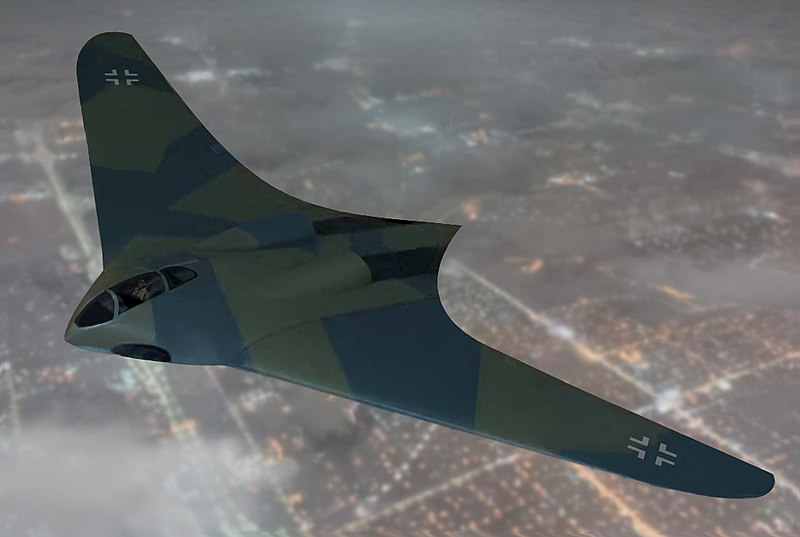
Looking at the image above you can see the design of the German flying wing. Now below, here is the image of what Kenneth Arnold reported in his UFO sighting.
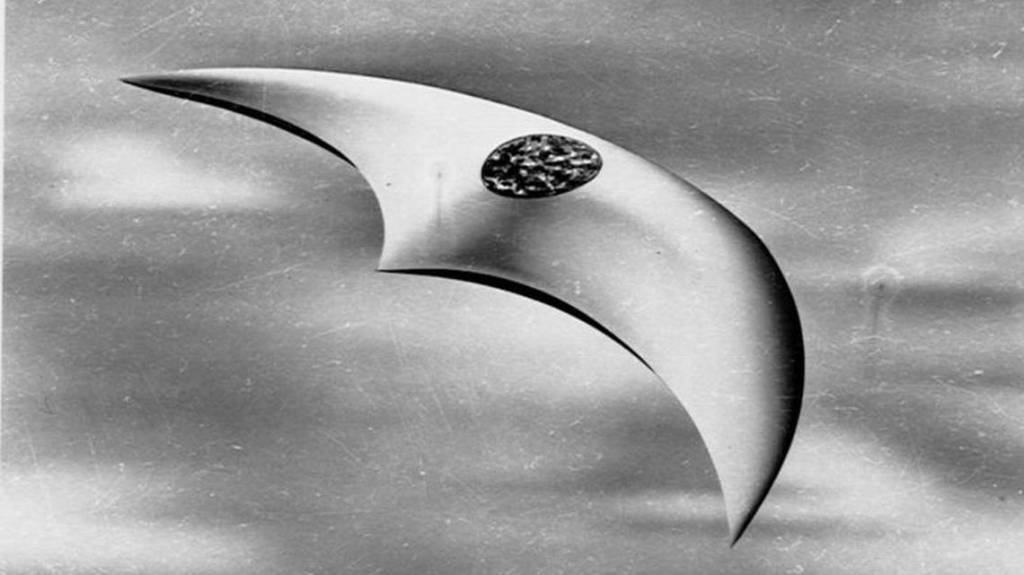
Noting the resemblance, and the flight in formation, is it possible that what Kenneth Arnold encountered were not UFOs but were experimental flying wing aircraft designed by the Operation Paperclip scientists?
The possible connection between Operation Paperclip and the Roswell Crash
Unraveling Roswell: A Controversial Connection to Nazi Saucer Technology
The Roswell UFO incident of 1947 remains one of the most debated and mysterious events in modern history. While the official explanation attributes the crash to a weather balloon, conspiracy theories suggest a different narrative—one that involves extraterrestrial beings or, more controversially, a connection to Nazi saucer technology developed by Operation Paperclip scientists.
Operation Paperclip was a covert program initiated by the United States after World War II to recruit German scientists, engineers, and technicians, including those involved in advanced weapons development, to work for the Allied forces. Among the scientists brought to the U.S. were individuals with expertise in rocketry and aviation, many of whom had worked on unconventional aircraft designs for the Nazis.
During World War II, Nazi Germany was known for its ambitious and sometimes unconventional military projects. One such project was the development of saucer-shaped flying craft, often referred to as “Foo Fighters” or “Die Glocke.” These experimental aircraft were designed to achieve superior maneuverability and speed compared to traditional aircraft of the time.
On July 8, 1947, something crashed near Roswell, New Mexico, capturing the attention of locals and the military. Initial reports suggested a “flying disc” had been recovered, but the U.S. military quickly changed its statement, asserting that what had crashed was a weather balloon. This abrupt change in narrative fueled speculation and conspiracy theories that persist to this day.
Proponents of the theory that Operation Paperclip scientists were involved in the Roswell incident argue that the crash involved a saucer-shaped flying craft based on Nazi technology. The idea is that former German scientists, now working for the United States, continued their research on advanced aircraft and were responsible for the development of the alleged saucer.
The Roswell UFO incident continues to be a subject of fascination and controversy, with competing theories attempting to explain the mysterious crash. While the idea that Operation Paperclip scientists were involved in the development of a saucer-shaped flying craft adds an intriguing layer to the narrative, the lack of conclusive evidence makes it challenging to confirm or dismiss this hypothesis definitively.
Is it just coincidence that the United States brought Nazi scientists working on both flying wings and saucer technology, only to shortly thereafter to have reports of UFOs similar to flying wings and Nazi saucer craft reported all over America, including the Roswell crash? Only the government knows and they have yet to release all of the secrets from Operation Paperclip.
 ALIEN BLUE BOOK