My Trip to see the Khumjung Yeti Scalp
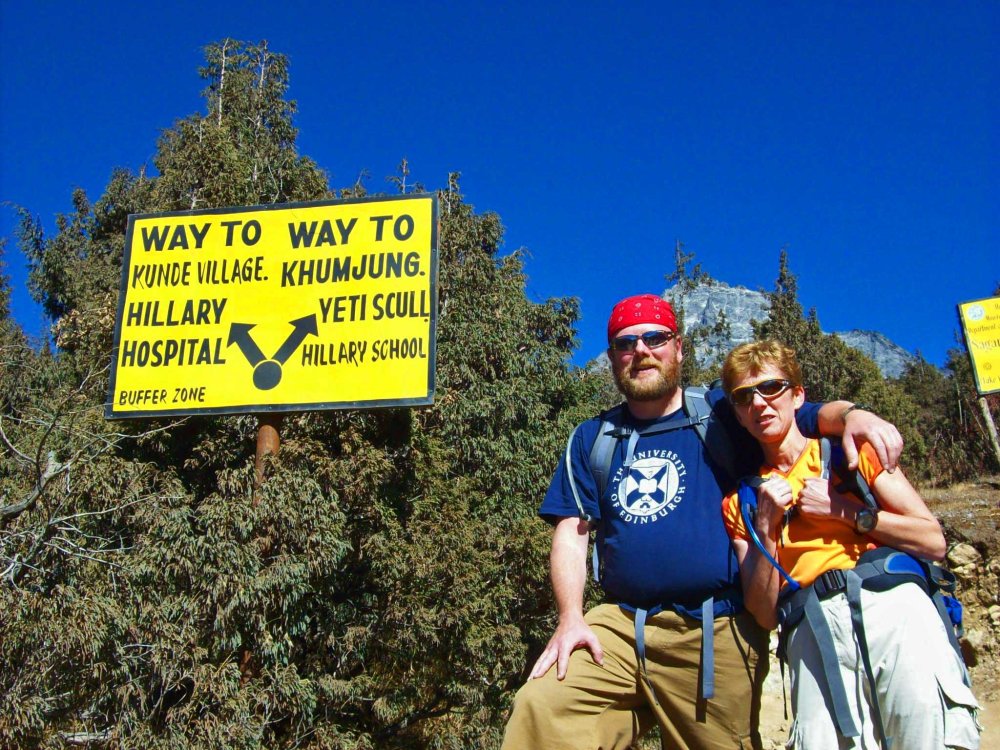
In 2010 I spent 40 days trekking in the high passes of the Himalaya. Over that time I was able to see three of the significant valleys in the Himalayas, including a visit to the scene of the Yeti attack in Machermo which I’ll address in another post. One of the highlights of the trip for me was getting to visit the Gompa in Khumjung which purportedly held the scalp of a Yeti.
While on the trek we had downtime every night after dinner to talk with the Sherpas with our team as well as the locals who ran the teahouses we stayed at during the trip. On a couple of occasions I brought up the Yeti, every time, the conversation was quickly directed to something out which I found interesting. One night, one of the Sherpa I’d become friendly with pulled me aside and explained to me what was going on. He said that many of the locals were very afraid of the Yeti and believed that it was dangerous. Also being relatively superstitious, they did not like to talk about the creature. He also explained that, that was the reason my request to do a night hike was quickly nixed with the explanation that it was too cold at night.
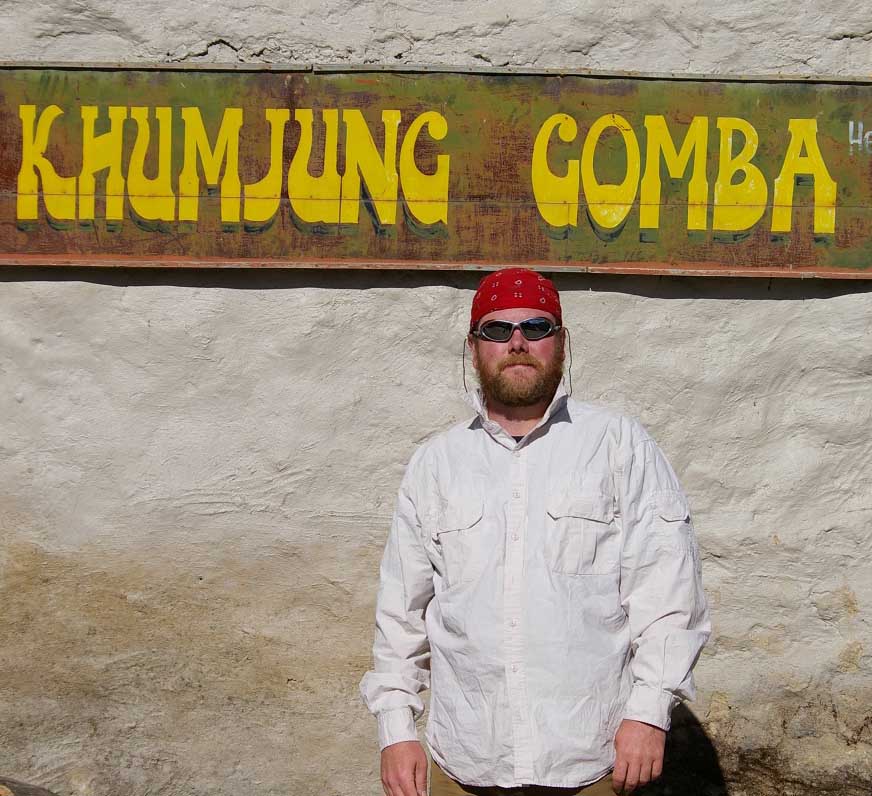
Arriving at the Gompa we were initially told that we would not be able to view the scalp, that it was locked in a case and the attendant did not have the key. This of course was said in front of a large number of tourists. My Sherpa friend pulled me aside and said, let things thin out, then offer a donation. So that’s exactly what I did and after making a donation and he agreed to open the case and bring out the scalp. Once he did we got to get up close to the small glass container that contained the skull. Even with additional and significant donation offers, the attendant was unwilling to open the small glass case. So the glass and the lack of light made getting a good shot almost impossible sbut here’s my best one below:
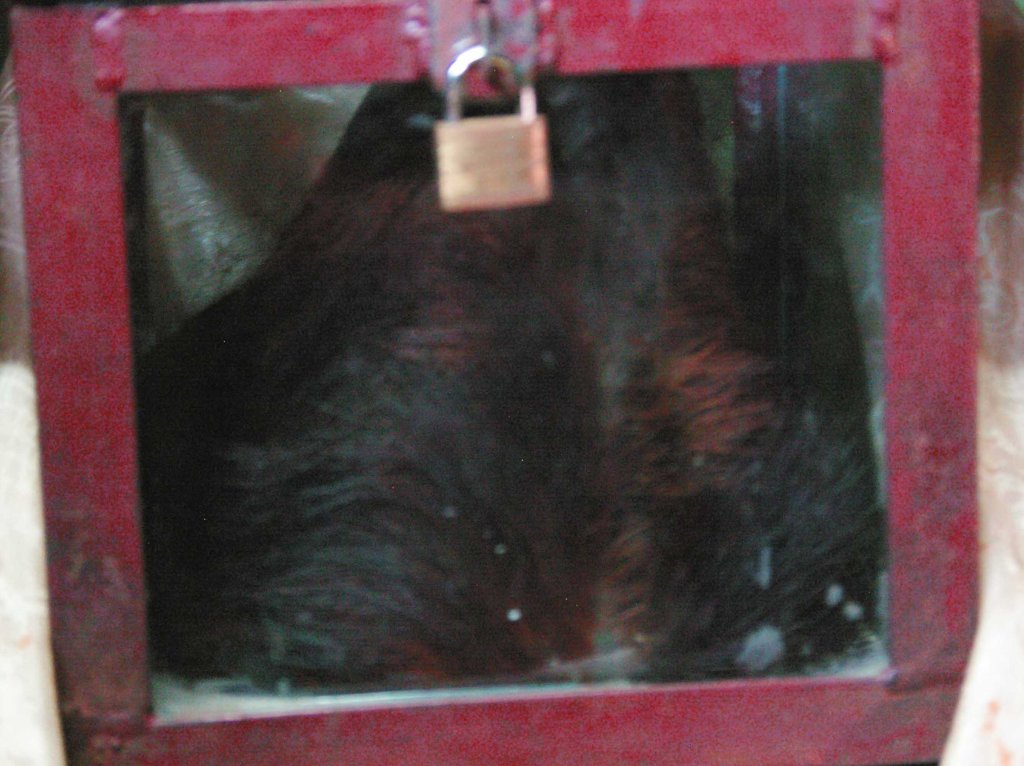
I’m a big fan of cryptids like the Yeti, but I’m also a scientist and the fact is the Khumjung skull is not a Yeti skull, it has been previously investigated and it turned out to not be the real deal.
A History of the Yeti Scalp
First, a history of the skull composed by Ang Rita Sherpa, of The Mountain Institute 2004
“The Khumjung Gomba possesses a rare Yeti skull. Generations ago, before Khumjung Gomba was established, the people of Thame, Namche, Khunde, and Khumjung celebrated the festival of Dumji together at Thame every year. After some time, a dispute arose over management of the festival, and the people of Khunde, Khumjung and Namche left Thame to celebrate at Khumjung. When they left, the people of Khumjung expected a cultural gift of some significance – perhaps prayer flags, Buddhist scriptures, or ritual instruments – from the people of Thame, but were surprised to receive only a yeti skull. The villagers of Khumjung were so offended by this meager gift they kicked the skull all the way home. Only now, after increased interest from Western scientists, tourists, and mountaineering heroes including Sir Edmund Hillary and local leaders like Konchok Chumbi Sherpa, has the cultural and biological value of the skull been recognized.
The legendary Yeti or so-called “Abominable Snowman” is a well-known feature of Solu Khumbu. These creatures have been searched and hunted for but are rarely sighted. The Yeti, according to legend, is a shy humanoid creature that inhabits the high, remote regions of the Himalaya. While traversing the region you may hear Sherpas and other hill people describe the Yeti’s superhuman strength and its ability to carry off yaks and even abduct children.
The Sherpas distinguish three different types of yeti: Drema, or Telma the messenger of calamities; Chuti which preys on goats, sheep and yaks; and Mite or Midre which also attacks animals and sometimes men. Sherpas believe that the findings of mysterious footprints in the snow and several incidents of yaks killings support the legend, and Sherpa accounts say the yeti’s height is approx. 6-8 feet with a conical scalp, pointed ears, hairless chest area and a human-like face. The creature is said to have a very bad temperament and will attack anyone who ventures close enough.
Tourists who would like to see the skull are encouraged to submit a small donation for the monastery’s maintenance. Tourists are a major form of support for Khumjung’s monastery.”
Investigating and Debunking the Scalp
The Khumjung Yeti Scalp, a purported artifact of the legendary Yeti creature, has long captivated the imagination of cryptozoologists and enthusiasts alike. However, recent scientific investigations have cast doubt on its authenticity, unraveling the mystery surrounding this iconic relic.
In 1958, Sir Edmund Hillary, the renowned mountaineer and conqueror of Mount Everest, and his expedition team discovered the alleged scalp in the Khumjung monastery in Nepal. The scalp, said to be from a Yeti, was regarded as a significant find and became a symbol of the elusive creature’s existence. However, with advances in scientific techniques, skepticism grew, prompting several investigations to analyze the artifact.
The most comprehensive examination to date occurred in 2011 when the scalp was subjected to rigorous analysis at the Oxford Radiocarbon Accelerator Unit. The results unveiled a surprising revelation: the scalp was determined to be crafted from the hide of a serow, a Himalayan goat-like antelope. This finding dealt a significant blow to the authenticity of the Khumjung Yeti Scalp, leading many to question the veracity of other Yeti-related evidence.
Furthermore, experts examined the scalp’s hair samples using DNA analysis. The analysis revealed no genetic material distinct to an unknown or undiscovered species. Instead, the hair was identified as belonging to known animals, including various Himalayan bear species, Himalayan goral, and even human sources. These findings further eroded the credibility of the scalp’s supposed Yeti origins.
Additionally, proponents of the Khumjung Yeti Scalp argued that the artifact showed signs of being exposed to intense heat, suggesting it had been subjected to a traditional ritual of burning and preservation. However, skeptics countered this claim by asserting that the heat damage could be attributed to a variety of factors, including poor storage conditions, exposure to fire, or even the normal aging process.
Related Bigfoot Posts
Whitehall, NY the Bigfoot Hotspot in the Adirondack Mountains
Bigfoot in the Histories of the PNW Tribes
The Patterson-Gimlin Bigfoot Film
 ALIEN BLUE BOOK
4 thoughts on “My Trip to see the Khumjung Yeti Scalp”