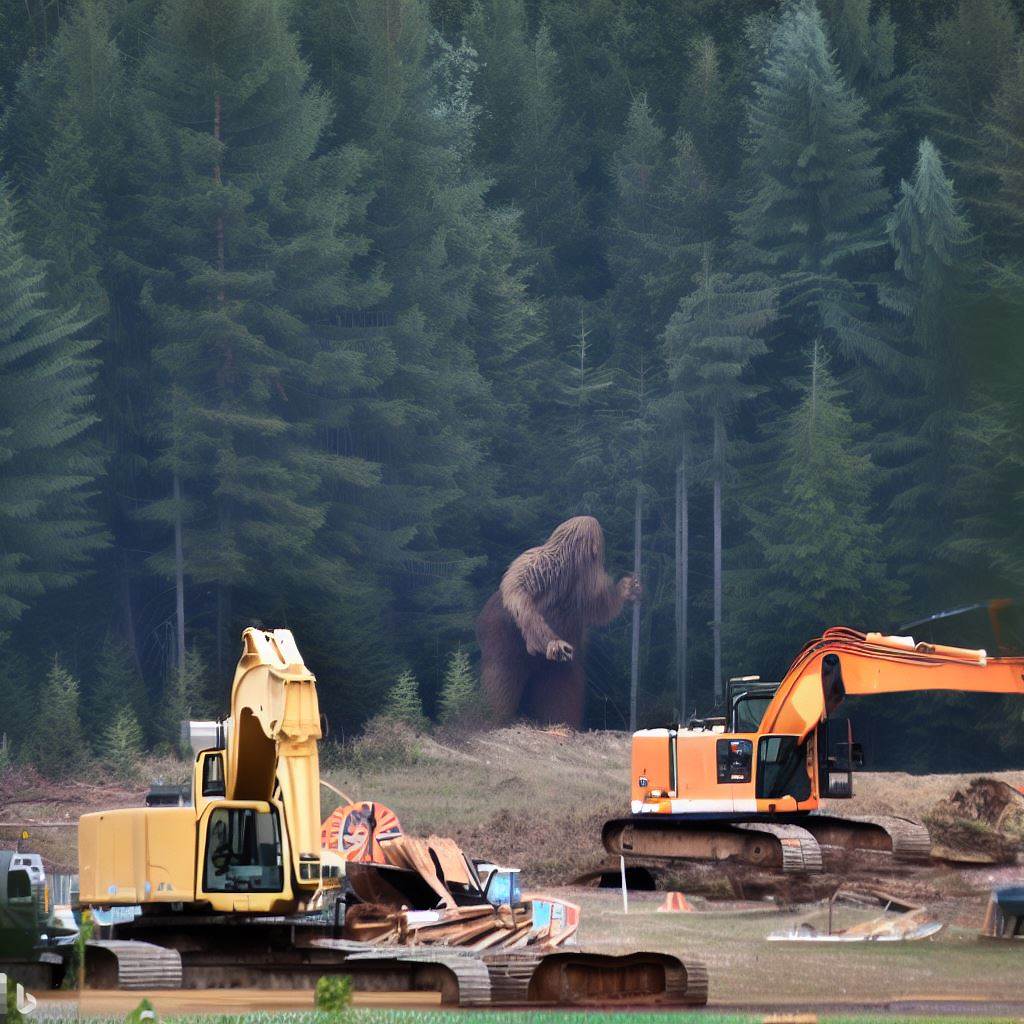
How Bigfoot got its name
The origins of the name “Bigfoot” can be traced back to the rich histories and mythologies of Native American people, particularly those indigenous to the Pacific Northwest region of the United States and Canada. The name itself emerged as a result of various encounters, legends, and cultural beliefs surrounding a mysterious creature believed to inhabit the remote wilderness areas.
For countless generations, Native American tribes in the Pacific Northwest have shared stories and legends about a towering, hairy creature that roamed the dense forests and mountains of the region. These stories varied among different tribes, but the common theme was a large, elusive creature that left behind enormous footprints, hence the name “Bigfoot.”
Many Native American tribes have their own unique names and descriptions for this creature. For example, the Salish people referred to it as “Sasquatch,” while the Lummi tribe called it “Ts’emekwes.” These names reflected the diverse languages and cultures of the indigenous peoples who lived in harmony with the land.
The legends and oral traditions surrounding Bigfoot were deeply intertwined with Native American spirituality and beliefs. Some tribes considered Bigfoot to be a guardian of the forest or a supernatural being with powerful abilities. In some stories, Bigfoot was seen as a trickster figure, while in others, it was a gentle giant or a messenger from the spirit world.
The encounters with Bigfoot were not limited to Native American communities. As European settlers expanded westward and explored the wilderness, they also came across reports of this enigmatic creature. Over time, the term “Bigfoot” became more widely used and entered popular culture.
In the 1950s and 1960s, the term gained significant attention when a series of alleged sightings and footprint discoveries were publicized. One notable case was the 1958 discovery of large footprints near Bluff Creek, California, by a construction worker named Jerry Crew. The footprints attracted media coverage and sparked public fascination with the creature, further solidifying the name “Bigfoot” in the public consciousness.
In the annals of cryptozoology, one event stands out as a landmark moment: Jerry Crew’s Bigfoot encounter at Bluff Creek. This encounter, which took place in the wilds of Northern California, would become one of the most famous and influential sightings in the search for the legendary creature.
Jerry Crew and Bluff Creek
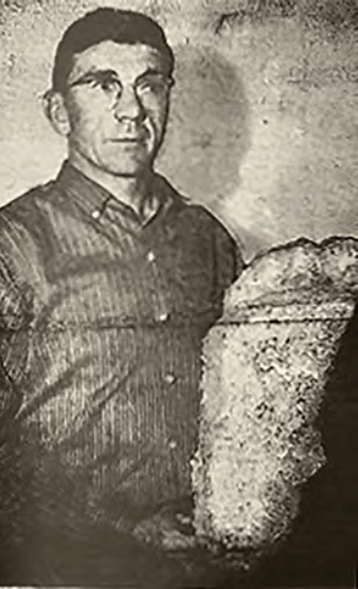
It was a sunny day in October 1958 when Jerry Crew, a heavy equipment operator, was working on a road construction project near Bluff Creek. Crew and his crew members were tasked with building a logging road through the remote and dense forests of the area. Little did they know that their work would forever change the course of Bigfoot lore.
As the team was clearing the way for the road, they stumbled upon a set of large, human-like footprints in the freshly turned soil. The footprints were about 16 inches long and deeply imprinted in the ground, leaving no doubt that they were made by an enormous creature. Crew and his colleagues were astounded by the discovery and immediately realized the potential significance of what they had found.
Intrigued and excited, Crew cast plaster molds of the footprints to preserve them as evidence. He also took photographs, documenting the tracks for the world to see. News of the discovery quickly spread, captivating both the media and the public’s imagination. The mysterious footprints were dubbed “Bigfoot tracks,” a name that would forever be associated with the creature.
The story of Crew’s encounter gained widespread attention, and skeptics and believers alike weighed in on the authenticity of the footprints. Some dismissed them as a hoax, suggesting that Crew and his team had fabricated the tracks to gain notoriety. However, numerous experts examined the evidence and deemed it genuine. Even renowned anthropologist Dr. Grover Krantz, a respected figure in the field, concluded that the tracks were indeed left by an unidentified primate.
Crew’s encounter at Bluff Creek became a turning point in Bigfoot research. It sparked a wave of interest and further investigations into the elusive creature. Researchers flocked to the area, searching for additional evidence and eyewitness accounts. Bluff Creek would later become known as a hotspot for Bigfoot sightings, drawing enthusiasts and skeptics alike in their quest for the truth.
Decades later, the Bluff Creek incident remains a cornerstone of Bigfoot lore. It serves as a reminder of the enduring mystery surrounding the creature, fueling the ongoing debate between those who believe in its existence and those who consider it nothing more than folklore.
Jerry Crew’s encounter at Bluff Creek stands as a testament to the power of a single sighting to capture the collective imagination. Whether Bigfoot is real or not, it continues to captivate our fascination with the unknown and serves as a reminder that some mysteries are yet to be solved
The Native American influence on the name “Bigfoot” is crucial to understanding its cultural significance and the creature’s place in regional folklore. While the name itself may have evolved through Western influences, it is important to recognize and respect the indigenous traditions that have long recognized and respected the existence of such a creature in their ancestral lands.
It is worth noting that the beliefs and interpretations of Bigfoot among Native American tribes are diverse and should be approached with cultural sensitivity and respect. The stories and myths surrounding Bigfoot hold deep cultural significance for these communities and contribute to the rich tapestry of their heritage
 ALIEN BLUE BOOK
4 thoughts on “how bigfoot got its name”